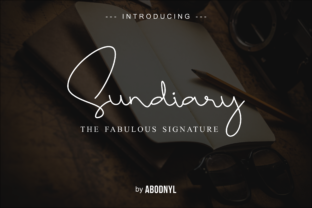
Sundiary: A Script Font That Makes Small Business Branding Feel Effortlessly Elegant
As a small business owner, you know that every detail of your brand matters. From the packaging your customer receives to the way your social media posts look, consistency builds trust. But finding the right visual voice can be challenging, especially when it comes to typography. That is where a premium font like Sundiary steps in. This elegant script font brings a signature style to your materials without requiring a design degree. Whether you run a boutique, a bakery, a coaching practice, or an online shop, Sundiary can help you look established, polished, and memorable across every customer touchpoint.
What Makes Sundiary Stand Out for Brand Owners
Sundiary is a script font that feels like a handwritten signature. It carries an upscale, chic personality without feeling stiff or overly formal. The letters flow naturally, giving your brand a human touch that customers respond to. For a small business, this matters because people buy from people. A font that looks genuinely handwritten communicates warmth, care, and authenticity. Sundiary is not a generic script. It has a refined elegance that works beautifully for brands that want to feel approachable yet premium.
When you open Sundiary, you notice the graceful curves and balanced proportions. It is a display font, meaning it shines when used for headlines, logos, and accent text. It is designed to draw attention and create a sense of quality. For a business owner, that translates directly to customer perception. A logo set in Sundiary instantly feels more curated than one set in a basic system font. Your materials start to look intentional, and that intentionality builds credibility.
Where Sundiary Works Best in Your Business
One of the biggest questions I hear from other entrepreneurs is where to use a decorative script font without sacrificing readability. Sundiary is versatile enough to handle several real-world applications.
- Logos and brand marks. Sundiary works as a standalone logo wordmark. If your business name is shorter, like a surname or a single word, this font can carry your entire identity. For longer names, use it as the emphasis word and pair it with a clean sans serif or serif font.
- Product labels and packaging. Imagine a handmade candle jar with your brand name in Sundiary, or a soap wrapper where the product name appears in this elegant script. It adds a handmade, artisanal feel that customers love to display on their shelves.
- Business cards and stationery. Your business card is often the first physical impression you make. Sundiary on a thick card stock immediately signals quality. Use it for your name or tagline, and keep the contact details in a simple sans serif for clarity.
- Menus and flyers. Cafés and restaurants can use Sundiary for menu headings or signature dishes. A bakery might feature its name in Sundiary at the top of a seasonal flyer. It draws the eye and sets a warm, inviting tone.
- Social media graphics. On Instagram, Pinterest, or Facebook, your text needs to be legible at small sizes and on mobile screens. Sundiary works well for short phrases, quotes, or product names in your posts. Keep body text minimal and let the font be the star.
- Website banners and digital ads. Use Sundiary for hero text or callout phrases on your homepage. It adds personality to an otherwise standard layout. Pair it with a clean web-safe font for body copy to maintain readability.
How Sundiary Helps Your Brand Look Consistent and Professional
Consistency is one of the hardest things for a small business to achieve. You might have a logo designed by a friend, social media templates you made yourself, and product labels from a different printer. When the typography changes across these materials, your brand starts to feel scattered. Using Sundiary as a consistent element across your logo, packaging, digital content, and print materials creates a thread that ties everything together. Your customers see the same elegant script on your website, your product box, and your thank-you card. That repetition builds recognition. Over time, they associate that flowing style with your business, and recognition builds trust.
Professionalism does not have to mean boring. Sundiary gives you a polished look that still feels personal. It is the kind of font that makes a customer think, "This brand cares about details." When you are competing with larger companies, that attention to detail can be your competitive advantage. Your materials look like they were created by someone who values quality, which is exactly the message you want to send.
Real Brand Scenarios Where Sundiary Shines
Let me give you a few realistic examples that might sound familiar.
A handmade beauty brand creates small-batch lip balms and body butters. The owner prints labels at home. Using Sundiary for the product name on each label instantly elevates the look. The font feels natural next to ingredients lists and clean sans serif text. Customers start posting photos of the balms on social media because the packaging looks beautiful.
A boutique bakery specializes in custom cakes. The owner uses Sundiary on the storefront window, on the menu board, and on the cardboard cake boxes. The handwritten style echoes the personal service customers receive inside. When someone posts a cake photo, the brand name in Sundiary is visible and memorable. The bakery becomes known not just for its desserts, but for its charming presentation.
A life coach or wellness entrepreneur builds a brand around warmth and connection. Sundiary appears on the website header, on the cover of a free workbook, and on the social media graphics that announce new offerings. The font communicates that the coach is approachable and human, not corporate. Clients feel drawn to that energy before they even book a session.
Readability Considerations for Real Business Use
No matter how beautiful a font is, it has to be readable in the places your customers will see it. Sundiary is a script font, so it works best at medium to large sizes. For business cards, logo applications, product labels, and social media headlines, the readability is excellent. However, for very small text, such as fine print on packaging or long paragraphs on a website, you should switch to a simpler typeface. Use Sundiary for the parts of your brand that need impact, and support it with a clean sans serif or serif font for body copy.
When you test Sundiary, pay attention to how it looks on a mobile screen. Many of your customers will first encounter your brand on a phone. Check that your logo and key headlines are legible at thumbnail size. Also consider printed materials: a font that looks crisp on screen may behave differently on uncoated paper or textured card stock. Always print a sample before committing to a large run of packaging or business cards.
Simple Font Pairing Ideas for Your Brand
Pairing Sundiary with another font is straightforward. The goal is balance. Since Sundiary is expressive and decorative, it pairs best with a neutral, highly readable companion.
- Sundiary plus a clean sans serif. This is the most popular pairing. A sans serif font like Open Sans, Lato, or Montserrat provides contrast. Use Sundiary for your brand name or headline, and the sans serif for body text, contact information, and subtitles.
- Sundiary plus a classic serif. If you want a more traditional or editorial feel, pair Sundiary with a serif font like Playfair Display or Merriweather. The serif adds structure while Sundiary adds elegance. This combination works well for luxury brands, stationary boutiques, and wedding-related businesses.
- Sundiary used alone for short messages. For social media quotes, product names, or thank-you cards, you can let Sundiary stand on its own. Keep the text short and give it plenty of white space so the font can breathe.
When you pair fonts, aim for contrast. A script font next to a simple sans serif creates visual interest. Avoid pairing Sundiary with another decorative script, as that often looks cluttered and confuses the reader. Keep it simple, and your brand will feel cohesive.
Testing Sundiary Before You Go All In
Before you use Sundiary across your entire brand, spend some time testing it in real contexts. Download the font and create mockups of your logo, a product label, a social media post, and a business card. Look at each use case and ask yourself a few questions. Is the font legible at the size you need? Does it match the personality of your business? Does it work well in both color and black and white? Does it still look good when the text is reversed out of a dark background? Testing early saves you from rebranding later. It also gives you confidence that the font represents your business the way you want it to.
Commercial Licensing: A Must for Business Owners
When you use Sundiary for your business materials, you need to check the commercial licensing terms. Fonts designed for personal use often restrict how you can use them commercially. If you plan to use Sundiary on products you sell, in packaging, on your website, in client work, or in downloadable templates, make sure you purchase a license that covers commercial use. This is not just a legal formality. It protects your business and respects the work of the type designer. Always read the license agreement carefully. If you are unsure, reach out to the foundry or marketplace where you purchased the font. Paying for the correct license is a small investment compared to the value a premium font brings to your brand identity.
Sundiary is a design asset that can help your small business look more professional, consistent, and trustworthy. Its elegant script style adds a signature touch to logos, packaging, menus, social media graphics, and more. By using it thoughtfully, pairing it with clean supporting fonts, and testing it in your actual customer materials, you can build a brand that feels both upscale and personal. For entrepreneurs who want their business to stand out without losing warmth, Sundiary offers a practical and beautiful solution.